
-
Publish Your Research/Review Articles in our High Quality Journal for just USD $99*+Taxes( *T&C Apply)
Offer Ends On
Publish Your Research/Review Articles in our High Quality Journal for just USD $99*+Taxes( *T&C Apply)
Offer Ends On
Harjeet Singh* and Saroj K Debnath
Corresponding Author: Harjeet Singh, Research Officer (Pharmacognosy), Regional Ayurveda Research Institute, CCRAS (Ministry of AYUSH) Port Blair (A & N Islands), India.
Received: February 19, 2026 ; Revised: February 21, 2026 ; Accepted: February 26, 2026 ; Available Online: March 06, 2026
Citation: Singh H & Debnath SK. (2026) Comparison of Macro Morphological and Microscopical Characteristics of Four Substitutes of Apiumleptophyllum (Ajamoda). J Agric For Meterol Stud, 4(3): 1-8.
Copyrights: ©2026 Singh H & Debnath SK. This is an open-access article distributed under the terms of the Creative Commons Attribution License, which permits unrestricted use, distribution, and reproduction in any medium, provided the original author and source are credited.
Views & Citations
Likes & Shares
‘Ajamoda’ refers to an important drug used in the traditional Ayurvedic system of medicine, which consists of umbelliferous fruits. The original drug, which is being used in the formulations, is Apiumleptophyllum. Confusion persists in the literature regarding its botanical identity. In place of Ajamoda (Apiumleptophyllum), several related umbelliferous fruits, viz. Apiumgraveolens, Trachyspermumroxburghianum and Trachyspermumammihave been used. The present study communicates on the different botanical sources of Ajamoda with its morphological features, microscopical characteristics and the different demarcating characters of all four sources of Ajamoda. The observations of the study will be useful to overcome the confusion and controversy among umbelliferous fruits used as Ajamoda, employing the important identifying characteristics as outlined in the article.
Keywords: Ajamoda, Comparative study, Fruit, Powder characteristics/studies.
INTRODUCTION
Ajamoda is a very important Ayurvedic drug used in many Ayurvedic compound formulations. Seeds from different botanical sources are used as Ajamoda in Ayurvedic system of medicine. Other than Ayurveda, the drug is used in Unani and Siddha systems of traditional medicine. The drug is commonly used for the treatment of a number of diseases, viz., abdominal pain, asthma, bronchitis, vomiting, hiccups, and bladder pain. According to the literature, its botanical identity is doubtful. The name Ajmoda has been very frequently imparted to various related umbelliferous fruits, viz., Apiumgraveolens, Carumstrictocarpum, Petroselinumsativum, Apiumleptophyllum, Trachyspermumammi and Trachyspermumroxburghianum. The authentic sample of Ajamoda is botanically equated to Apiumleptophyllum. Other different sources or substituted drugs are Apiumgraveolens, Trachyspermumammi and Trachyspermumroxburghianum. In terms of Ayurveda, Ajmoda is equated with many synonyms like Ajowan, Kharasva, Yavani, Ajwain, Ajmodaka, Deepyaka, Yavanika and Agnika, etc. In different places, depending on the availability of different plants, different botanical sources are employed in the preparation of many herbal formulations in the name of Ajmoda.
As per Ayurvedic Formulary of India, Ajamoda is used in more than 30 formulations like Abhadyacurna, Abhrakadivati, Agnikumara rasa, Agnitunda rasa, Agnitundivati, Ajamodadicurna, Ajamodarka, Ashwagnadhaleh, Bhasmavati, Brhatharidrakhanda, Brhatsaindhavadhyataila, Citrakadicurna, Dadhikaghrta, Kalyanavaleha, Kankayanagutika, Krmimudgara rasa, Mahasarasvathicurna, Samudrayacurna, Sarasvatacurna, SoubhagyaSunthi, Vaisvanaracurna, Vanyaajamodarka, Vidalavanadiguti, Vrddhiharivatika etc. As per AFI, the accepted source for Ajamodais Apiumleptophyllum (Pers.) Muell., and the dosage mentioned is 1-3 gm of the drug in powder form and 10-20 ml twice a day in liquid FORM obtained through distillation (Arka form) (Anonymous, 2003).
For the preparation of any Ayurvedic formulation, the correct identity of the drug is crucial; if the identity goes wrong, the efficacy of the preparation will lead to low therapeutic value or could even result in adverse drug interaction. Therefore, the current paper reports the results of a comparative study on all four sources of Ajmoda to assist in accurate botanical identification from fruits.
Literature review revealed that this type of study has not been carried out previously, even though the proper identification of the drug is a basic requirement for the ayurvedic herbal industry; hence, the study has been taken up.
Earlier, a few workers have studied the pharmacognostical and phytochemical aspects of the drug. Saraswathy et.al., reported identification of botanical sources and TLC/HPTLC pattern of Ajamoda in trade. In their study, the macroscopy as well as microscopic details of Apiumleptophyllum, Apiumgraveolens and Trachyspermumroxburghianum were studied and described along with TLC/HPTLC profile. Verma and Khosa also conducted the pharmacognostical studies of the fruits of Trachyspermumroxburghianum and laid down the standards for the same.
MATERIAL AND METHODS
The dried fruits were procured from crude drug suppliers of the local markets of Bangalore and Maharashtra state. The drugs were authenticated by the Survey of Medicinal Plants unit, CCRAS - Central Ayurveda Research Institute, Bangalore.
The macroscopical characters of the fruits were noted following standard procedure. For powder microscopy study, the powder was stained with phloroglucinol and concentrated HCl to study the lignified cells, trichomes, fibres, xylem vessels, vittae, oil globules, endosperm etc. The powder was also stained with N/50 iodine solution to detect the presence of starch. A small portion of powder was mounted in water to identify Calcium Oxalate crystals. Microscopy of the fruits was carried out by the methods prescribed by Trease and Evans (1983).
RESULTS AND DISCUSSION
The diagnostic characteristics of the fruits of Apiumleptophyllum as well as of the other umbellifers, used as an adulterant or substitute to ‘Ajmoda’ are described.
Macroscopic characteristics
Cyclospermumleptophyllum (Pers.) Sprague ex Britton & P. Wilson
Syn. Apiumleptophyllum(Pers.) F.Muell.
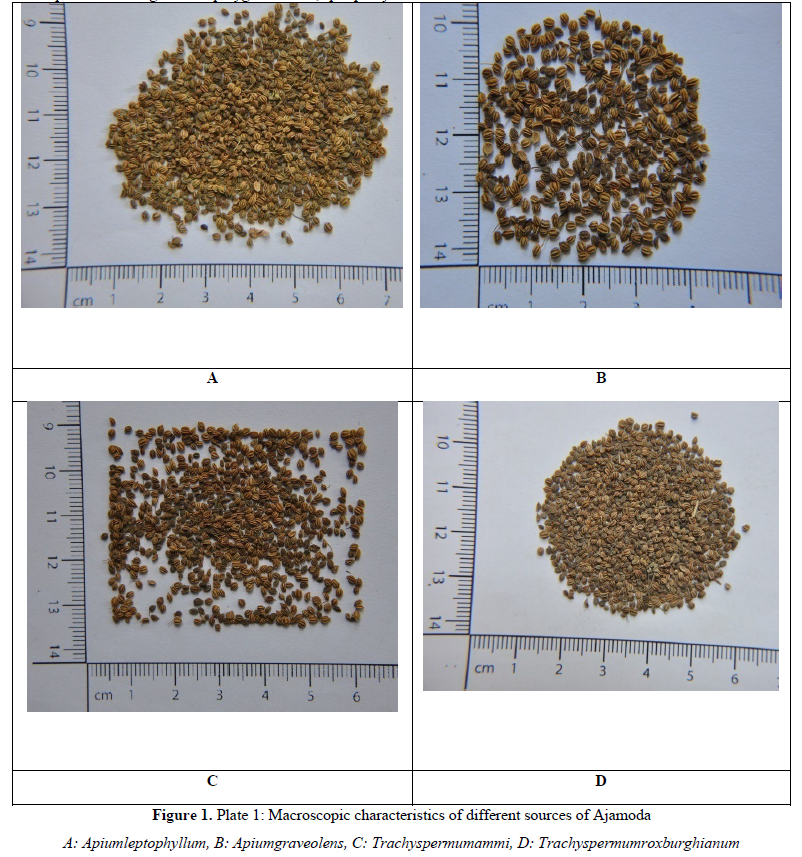
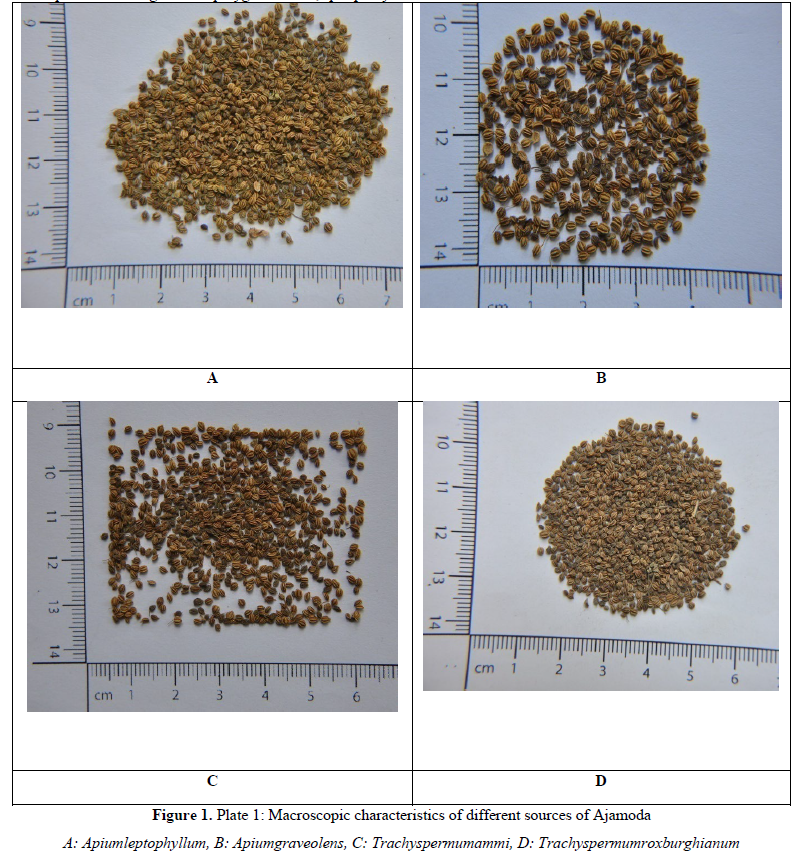
Cremocarpsglabrous, broadly orbicular with cordate base, about 2.0-3.0 mm long and about 2.0 mm broad, the ridges quite thick, prominent and unequal. Mericarps ovoid and more or less curved with arcuate basal ends. A. leptophyllum is a naturalised weed of American origin and frequently found around Mussoorie, Nainital and Chakrata hills in Uttarakhand.
Apium sellowianum H. Wolff
Syn. Apiumgraveolens Cham.
Cremocarps orbicular, about 1.5mm long and 1.0mm broad, light brown in colour with yellow ridges. Mericarps ovoid, oblong, slightly curved, the inner surface concave; the outer convex, smooth except for the ridges. A. graveolensis cultivatedas a source of celery in cold weather in India. In West Bengal, it is cultivated for its fruits to be used as a spice.
Trachyspermumammi (L.) Sprague
Cremocarpsmuricate, ovoid, laterally compressed, 1.7-3.0 mm long and 1.5-2.0 mm wide, pale in colour with one half to two-thirds of their apical portions slightly purplish in colour. Mericarps spathulate to obovoid and are more or less curved. Fruits of T. ammi are commonly known as ‘Ajowain’ and is extensively cultivated in India, particularly in Andhra Pradesh, Telangana, Madhya Pradesh, Uttar Pradesh, Maharashtra and Gujarat.
Psammogeton involucratus (Roxb.) Mousavi, Mozaff. & Zarre
Trachyspermumroxburghianum H. Wolff.
Cremocarps hispid, ovoid-oblong, constricted at the commissure, laterally compressed, 3.0-4.0 mm in length, 2.0 – 2.5 mm in width, light brown in colour with prominent yellowish ridges. The summits of the cremocarps end in broadly conical stylopodia. Mericarps oblong with arcuate basal ends, curved, 1.0-1.2 mm wide, dorsal surface convex, the commissural surface broadly spathulate. T. roxburghianum is being cultivated in different parts of India for its fruits, which are used in flavouring curries, either alone or in mixture with some other spices or condiments. They are also used in the preparation of pickles, Chutneys and preservatives. Its leaves are also used as a substitute for Parsley.
Microscopic characteristics
Cyclospermumleptophyllum (Pers.) Sprague ex Britton & P. Wilson
Syn. Apiumleptophyllum(Pers.) F.Muell.
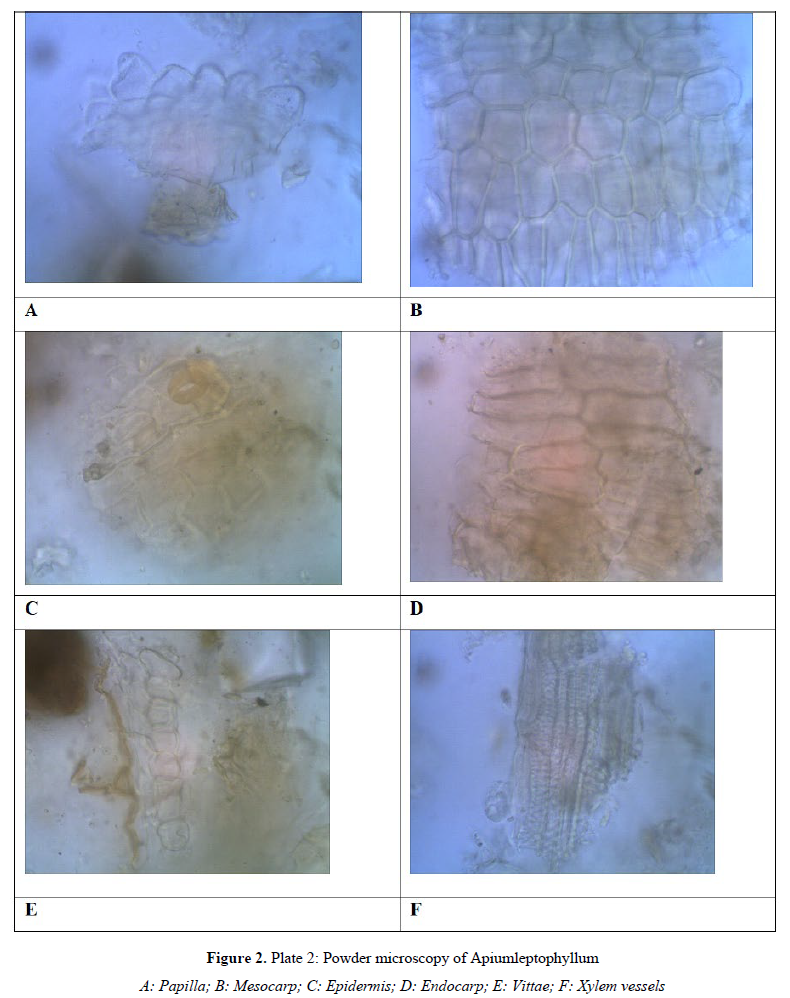
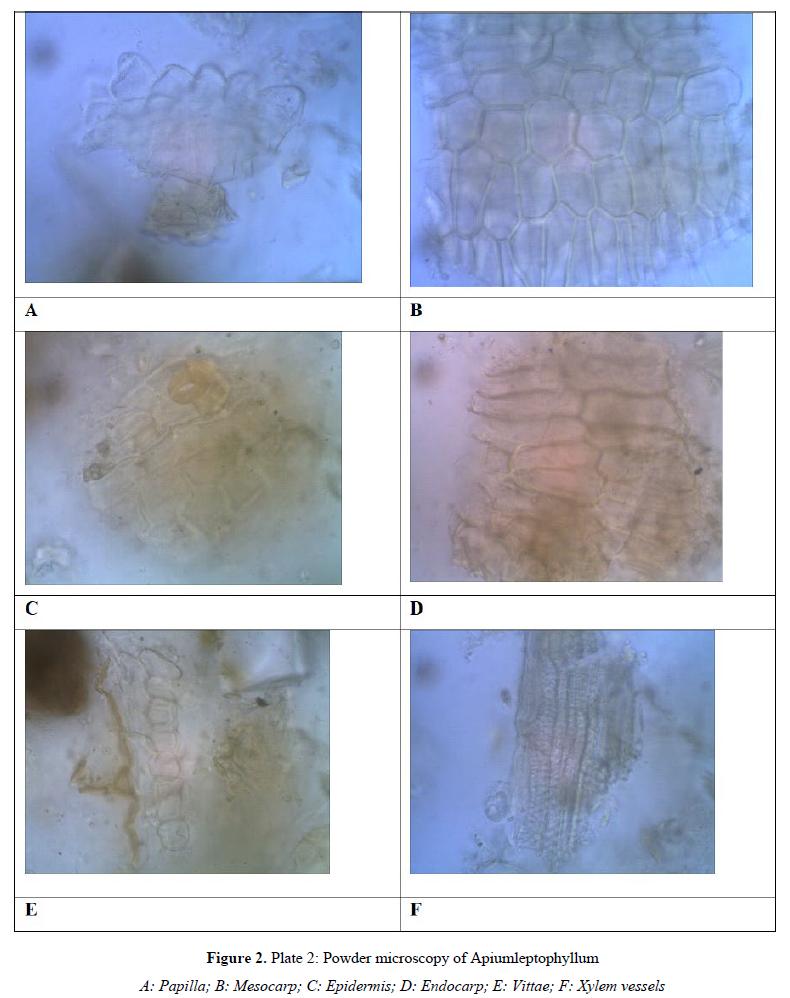
Powder yellowish brown in colour withpapillose epidermis and occasional presence of stomata, reticulate parenchymatous cells of mesocarp, fragments of yellowish-brown vittae; parquetry arrangement is not seen in endocarp; thick-walled endosperm polygonal cells contain aleurone grains and micro rosette crystals of calcium oxalate. Vascular bundle is present in each ridge with xylem vessels and tracheids.
Apium sellowianum H.Wolff
Syn. Apium graveolens Cham.
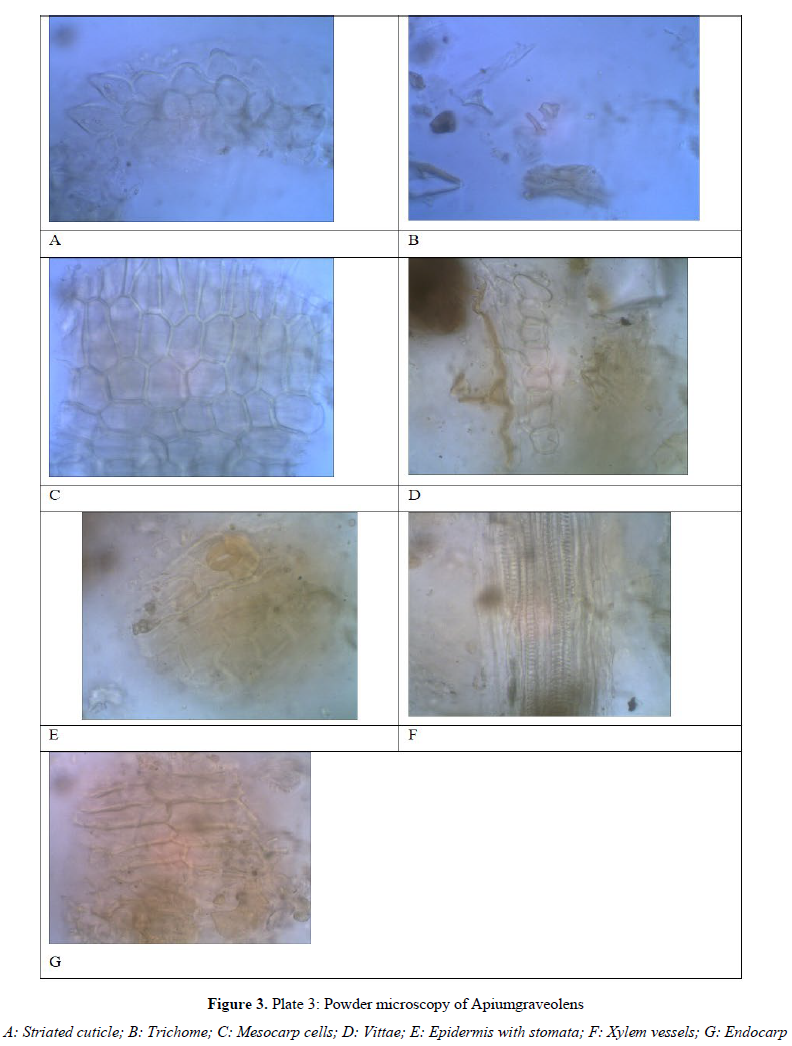
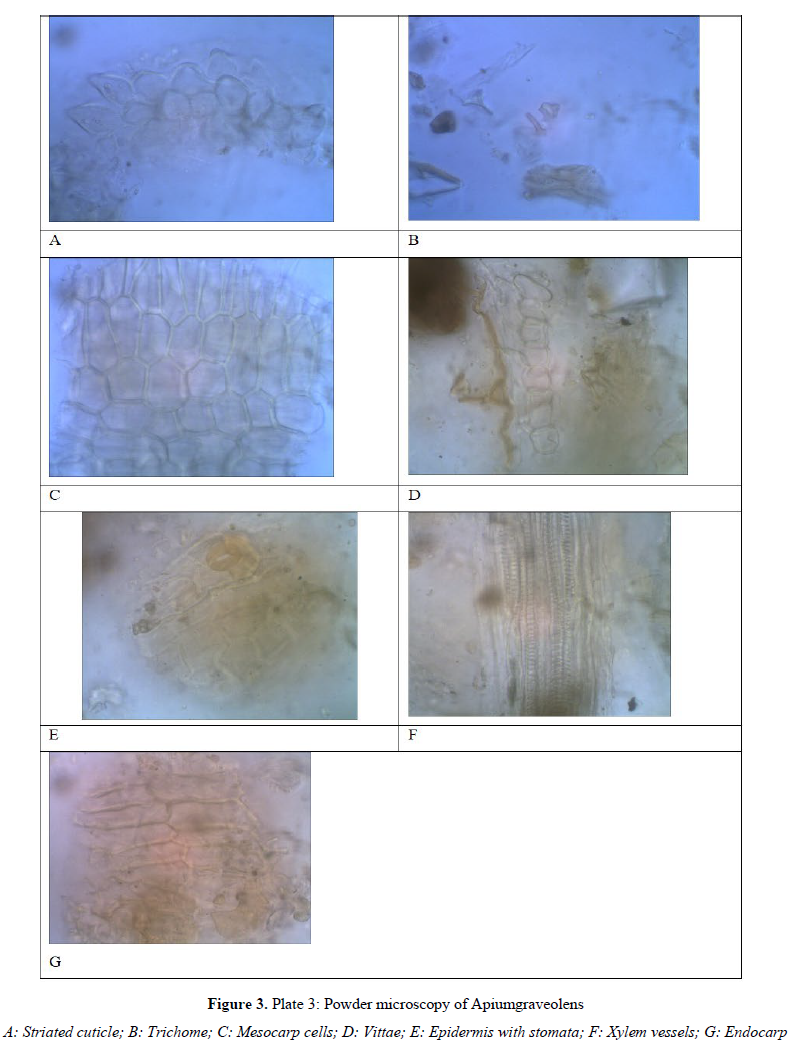
Powder dark brown in colour wavy walled epidermal cells are present, papillae present, trichomes are also present in the epidermis; parenchymatous cells of mesocarp with reticulate thickening; fragments of yellowish-brown vittae; parquetry arrangement is present in endocarp; thick-walled endosperm polygonal cells contain aleurone grains and micro rosette crystals of calcium oxalate. Vascular bundle is present in each ridge with xylem vessels and tracheids.
Trachyspermumammi (L.) Sprague
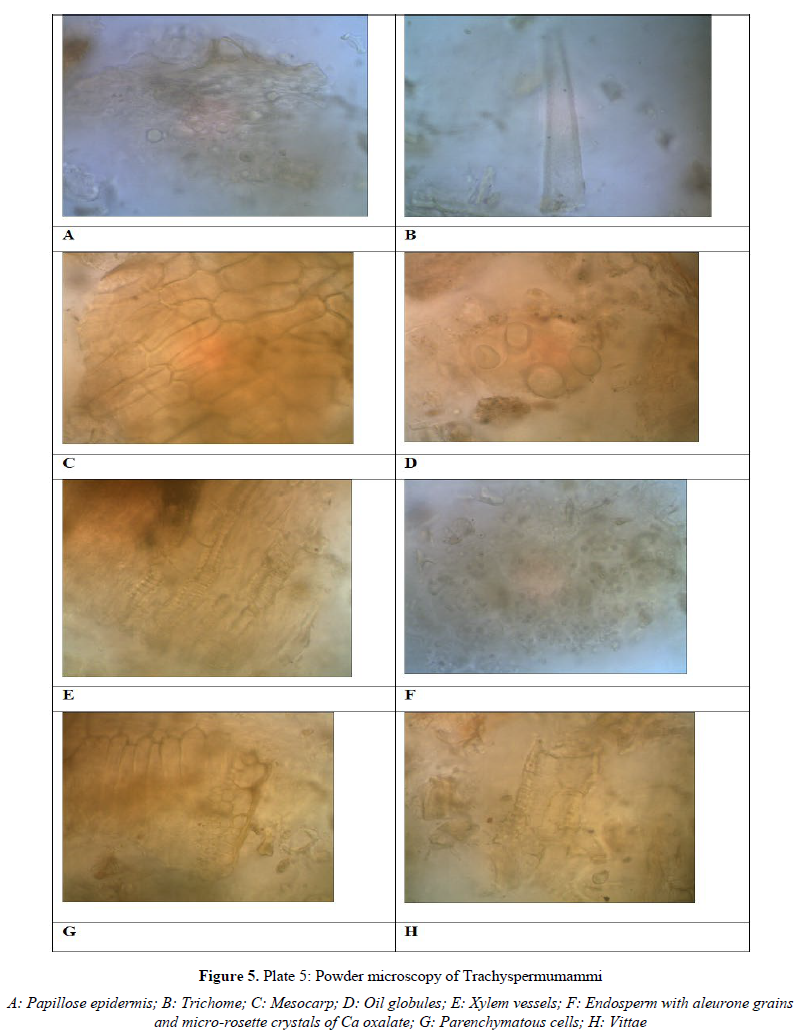
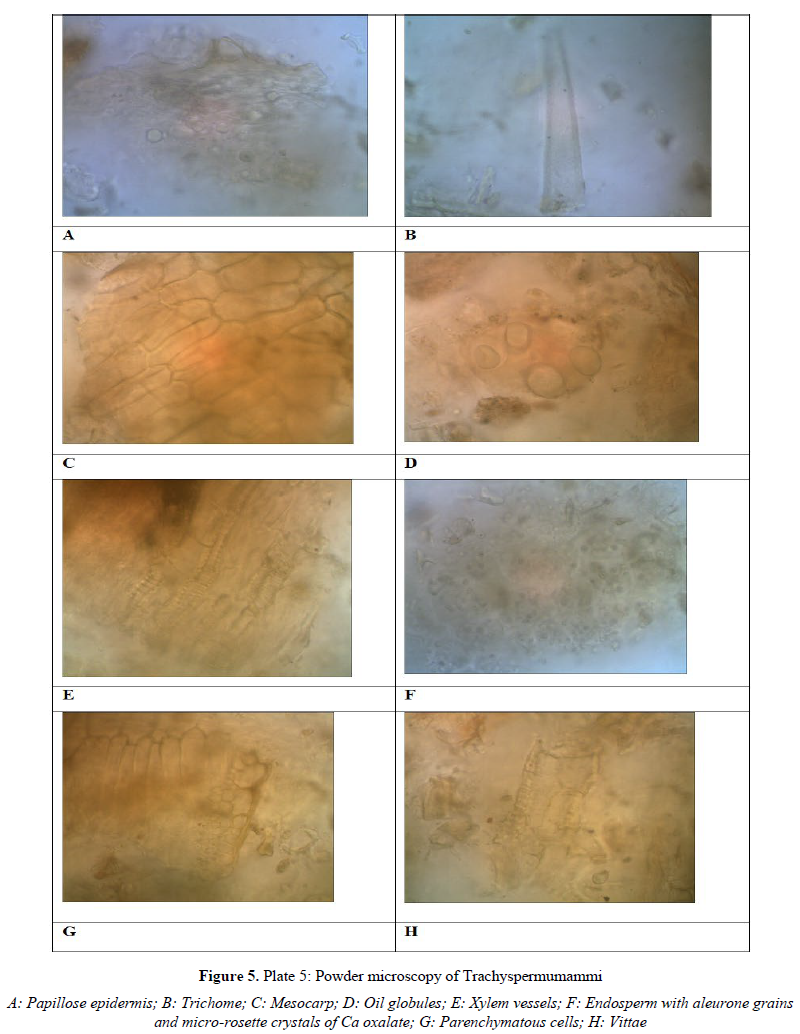
Powder greyish brown in colour with characteristic odour shows warty unicellular trichomesepidermis with papillae: mesocarp with rectangular to polygonal cells; parquetry arrangement is present in endocarp; endosperm with oil globules, aleurone grains and micro-rosette crystals of Ca oxalate; thin-walled parenchymatous cells; helical xylem vessels and vittae, long slender comprised of thin-walled cells.
Psammogeton involucratus (Roxb.) Mousavi, Mozaff. & Zarre
Trachyspermumroxburghianum H. Wolff.
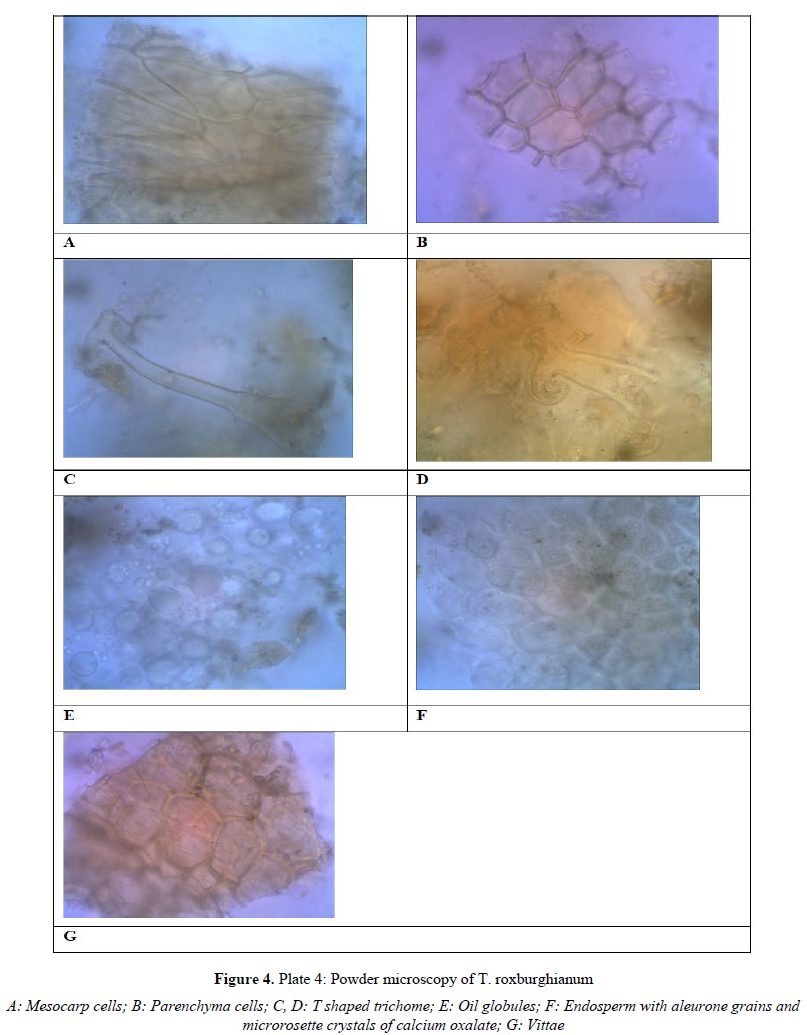
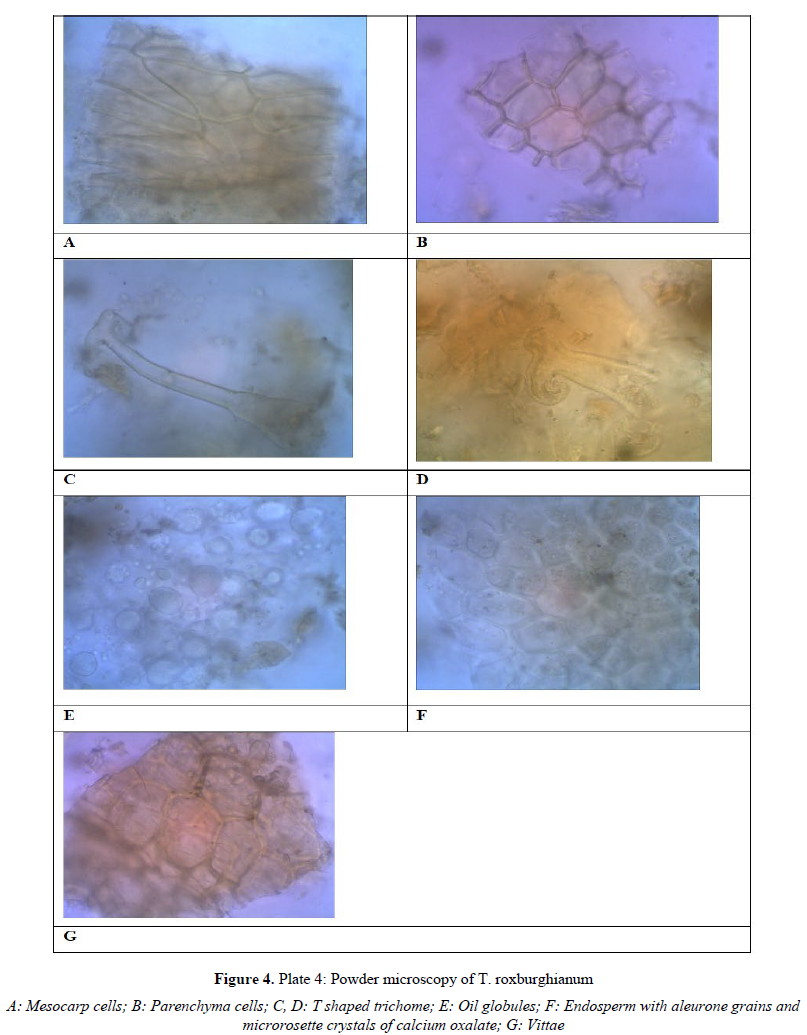
Powder light brown in colour with strong pleasant odour, shows abundant warty unicellular trichomes, with few rounded trichomes, and ‘T’ shaped trichomes, epidermal cells in surface view, thick walled groups of endosperm cells, which are unlignified, with abundant oil gloubles and microrosette crystals of calcium oxalate, parenchyma cells with xylem parenchyma, debris of xylem vessels with helical type, fragments of trichomes with epidermal cells, groups of thin walled mesocarp cells and thin walled parenchymatous cells and fragments of testa cells.
CONCLUSION
An examination of various volumes of the Ayurvedic Formulary of India, it was found that various categories of formulations indicate a wide use of Ajamoda fruit in many Ayurvedic polyherbal formulations, viz. Abhadyacurna, Abhrakadivati, Ajamodarka and Ajamodadicurna etc. The formulations are intended for internal use and generally indicate a therapeutic activity in cases of tastelessness, abdominal lump, hiccup and pain in the abdomen.
In the present study, the pharmacognostical details of the four umbelliferous dried fruits, viz. Apiumleptophyllum, Apiumgraveolens, Trachyspermumroxburghianum and Trachyspermumammi were studied and described. The study enumerates the controversy and complexity that exists regarding their proper identification/authentication and use of one and the same name for more than one drug and also for identifying the adulterants and substitutes. The genuine drug to be used in the name of Ajamoda is Apiumleptophyllum. The data evolved from the present investigation may be utilised for the identification and standardisation of the drug in order to check and ensure the quality of the drug.
ACKNOWLEDGEMENT
The authors are grateful to the DG, CCRAS, New Delhi, for providing the necessary facilities and encouragement to carry out the work successfully.

No Files Found


Internationally Accepted
Share Your Publication :